Build Your Bike & Roll to School Day
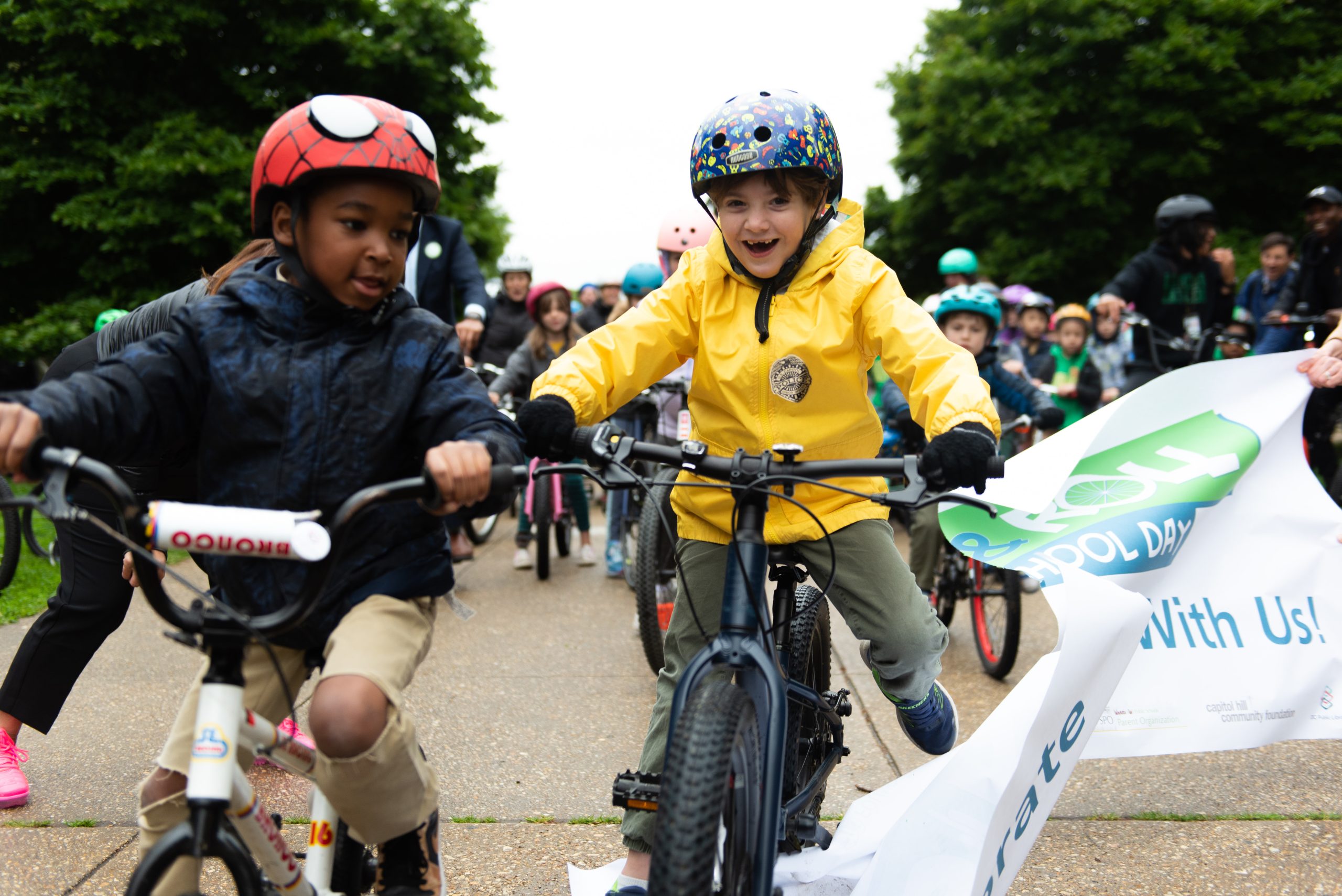
Washington, DC
National Bike & Roll to School Day looks different in every community. While most celebrations focus on building community, promoting safety, and having fun, the way these elements come together can vary widely. Some places host activities on campus, others organize off-campus events, and many do a combination of both. The ideas below—drawn from organizers across the country—can be adapted to fit the size, setting, and goals of your event. Explore them and imagine how your community can build its Bike & Roll to School Day!
Download a printable version of this guide.
Before the event
The success of a walk to school event lies in building a strong foundation that prioritizes student safety and community-wide engagement. This phase is all about mapping your path, spreading the word, and uniting local partners to turn a simple stroll into something more impactful.
- Connect with new partners: Bike shops and bike clubs may be able to help inflate tires and do quick checks and fixes. For example, a middle school in Madison, WI reached out to local bike mechanics to get help fixing up bikes at no cost to families.
- Tap into school clubs: Can the school choir sing? Can the dance team dance? Does the environment club or wellness club want to survey students about their favorite ways to get to school?
- Invite the mayor or another local dignitary: Maybe you want to thank a leader for supporting active transportation, or maybe you want to show them safety concerns that need attention. Consider how the event can be used strategically.
During the event
Now that the groundwork is laid, it’s time to transform the school commute into an unforgettable, high-energy experience. This section is packed with ways to keep students moving, from heart-pumping playlists to creative activities that ensure every child feels like a VIP.
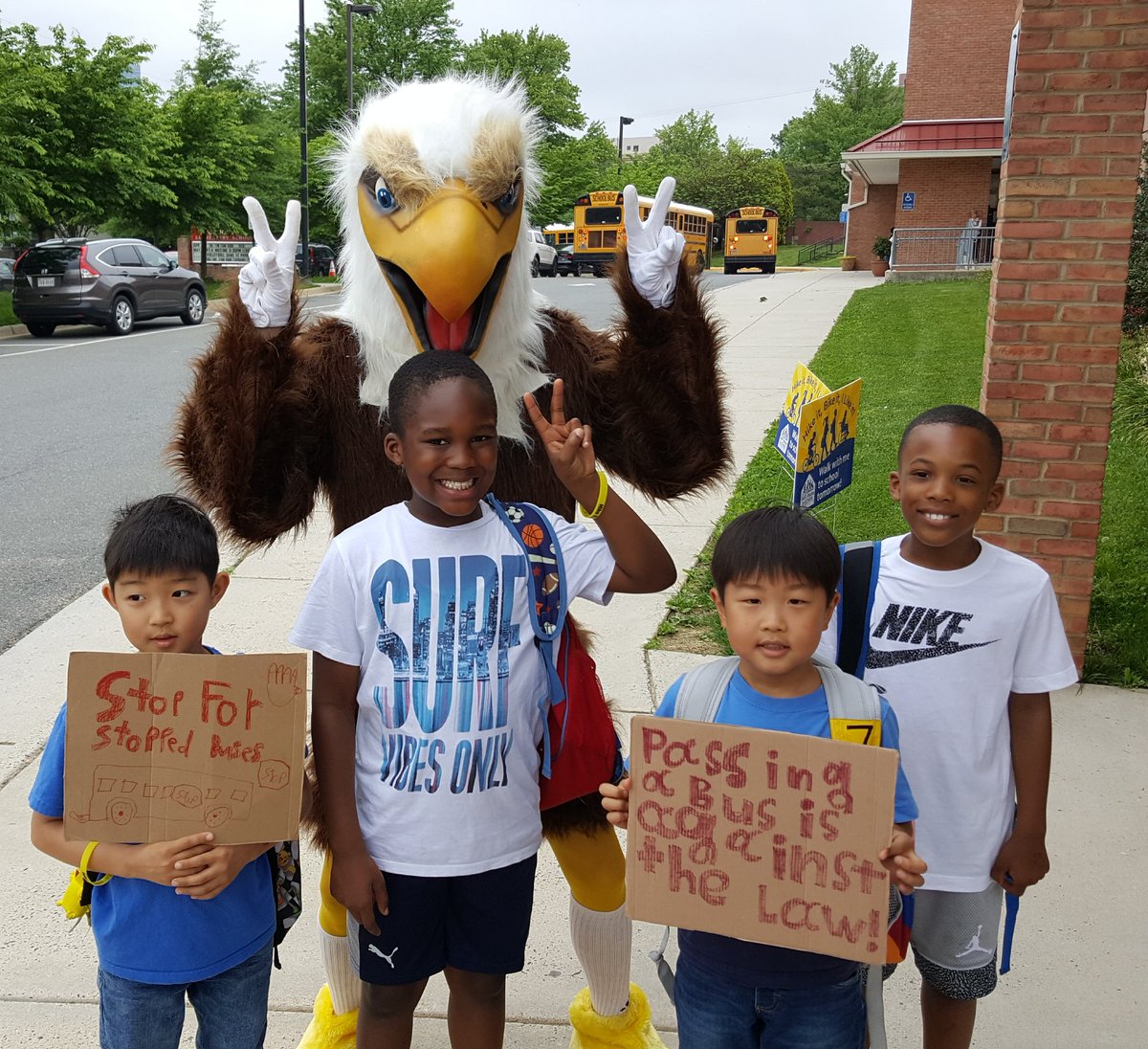
Vienna, VA
- Set the vibe: Make your event memorable with a soundtrack that energizes the entire route. Form a “Walk, Bike, & Roll Pep Band featuring local high school musicians or curate a playlist to help set the tone and get students moving. For an extra boost of excitement, consider inviting a local DJ to join the celebration and keep the energy high.
- Kick-off with a warm-up: Recruit a high school coach or the favorite PE teacher to lead a warm-up or cool down with the group.
- Make your mark: Hang a large banner for students to sign. Keep it up for the entire month.
- Ready to roll: Include bike repair workshops as part of the event or host a tune-up time before the event.
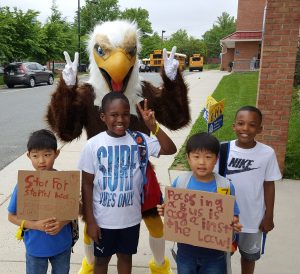
- Bring the school mascot to hype up students up as they arrive on campus (or do laps around the track). Go Panthers!
- Did someone say snacks? Offer fruit, yogurt, water, or something else to students as they arrive. Connect ahead of time with nutrition services if your school offers free breakfast.
- Read all about it: Ask the school librarian or classroom teachers to read a book that connects with walking. For example, K-2 students at a school in Saint Louis, Missouri heard Clifford Takes a Walk and received a copy to take home afterwards.
- Create a sign‑making station where families can design their own messages, or provide pre-made signs to carry or display on bikes. Try phrases like “Slow down for us,” “Safety for kids, everyone wins,” or “Let’s roll!” Inspire creativity by asking: What do you want drivers to notice? What message do you want the whole community to hear?
- Walk it home: Host a “walk home” event. For example, a school in Tampa, Florida used an afternoon event to support students who go to a nearby afterschool program at a local recreation center.
- Making tracks at the school: Build the event into the school day with laps around the track or around the school building.
- Build skills that stick: Incorporate education into your event by teaching pedestrian and on-bike safety skills as part of a PE unit or an afterschool skills clinic.
- Ribbon cutting time: Invite local officials to celebrate new safety improvements like a bike rack on the school campus, walkway that separates walking students from the drop-off zone in the parking lot, crosswalk improvements, or new sidewalk. For example, Macon-Bibb County, Georgia held a crosswalk painting day at a key crossing in front of a school.
- Testing, testing: In coordination with your local transportation engineering or public works team, use the event to test out new infrastructure using low-cost materials. For example, in Miami-Dade County, Florida, a pop-up bike lane was designed and constructed using temporary materials to get input from students and families.
Beyond the event
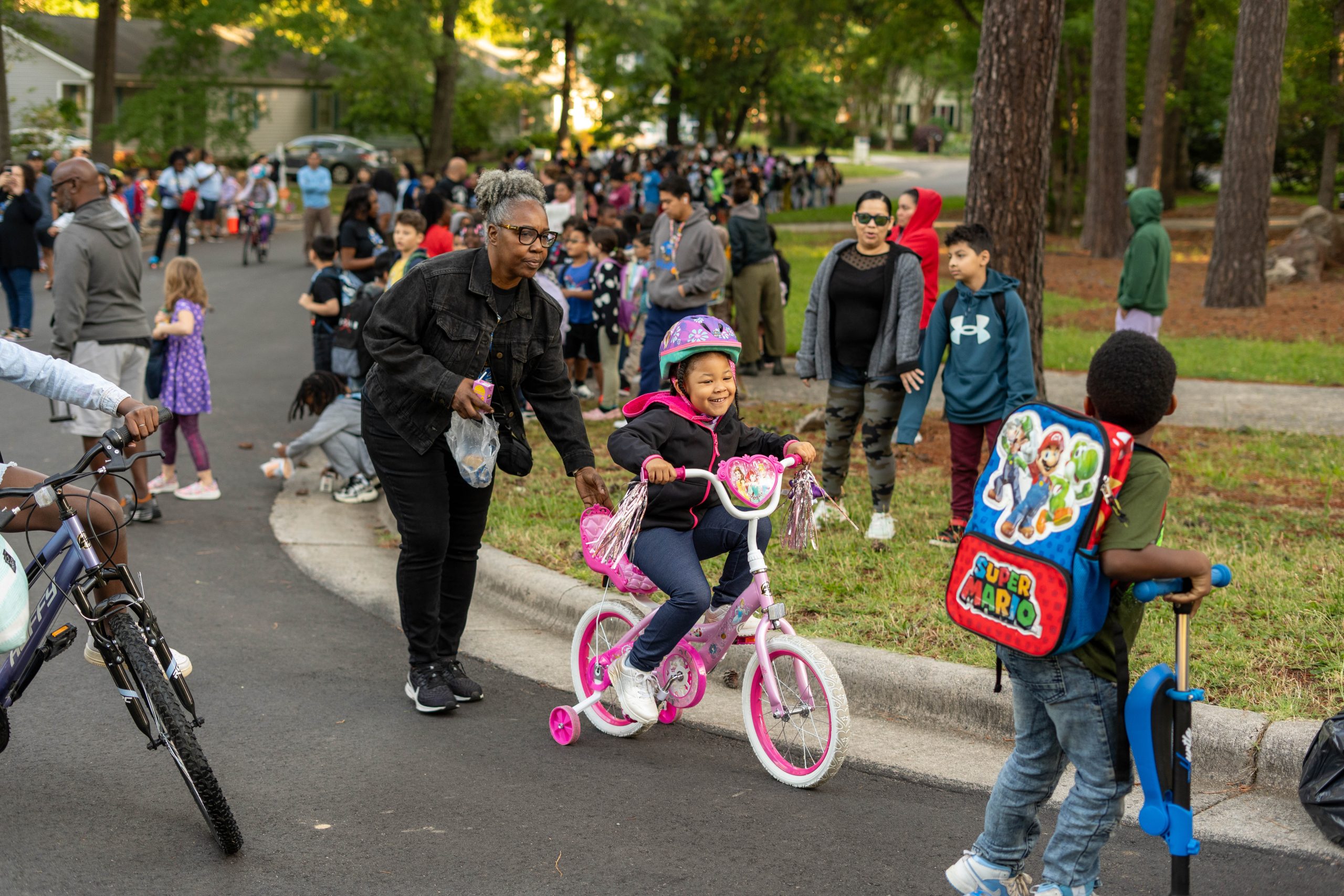
Durham, NC
The finish line is just the beginning! This section focuses on extending the impact of your event by turning a one-day celebration into lasting habits and meaningful community improvements.
- One small step: Launch a spring walking or biking bus that will operate on a regular basis. At a school in San Antonio, biking to school isn’t a once-a-year celebration, it’s a monthly tradition. In 2025, the school’s regular bike bus day had its highest levels of participation, showing how consistent events can turn active travel into a shared routine for students and families alike.
- Make it a week: Or a month. Or…longer! In Folsom, CA, an elementary school incentivized active participation through a raffle using student punch cards that indicated the number of active trips made during the week. Prizes included helmets, water bottles, gloves, bells, and more, all donated by local businesses and the Parent Teacher Organization.
- Ask for input: Whether using a walk audit or a simple survey, summarize information gathered from the event to request changes that will make it easier and safer to walk and bike.
- Still looking for ways to make your event a success? Check out our planning guide.
Have a great time!